Barefoot running vs running shoes: an honest comparison
An unbiased look at barefoot running vs traditional running shoes. What the research says, who benefits from each, and the pragmatic middle ground.
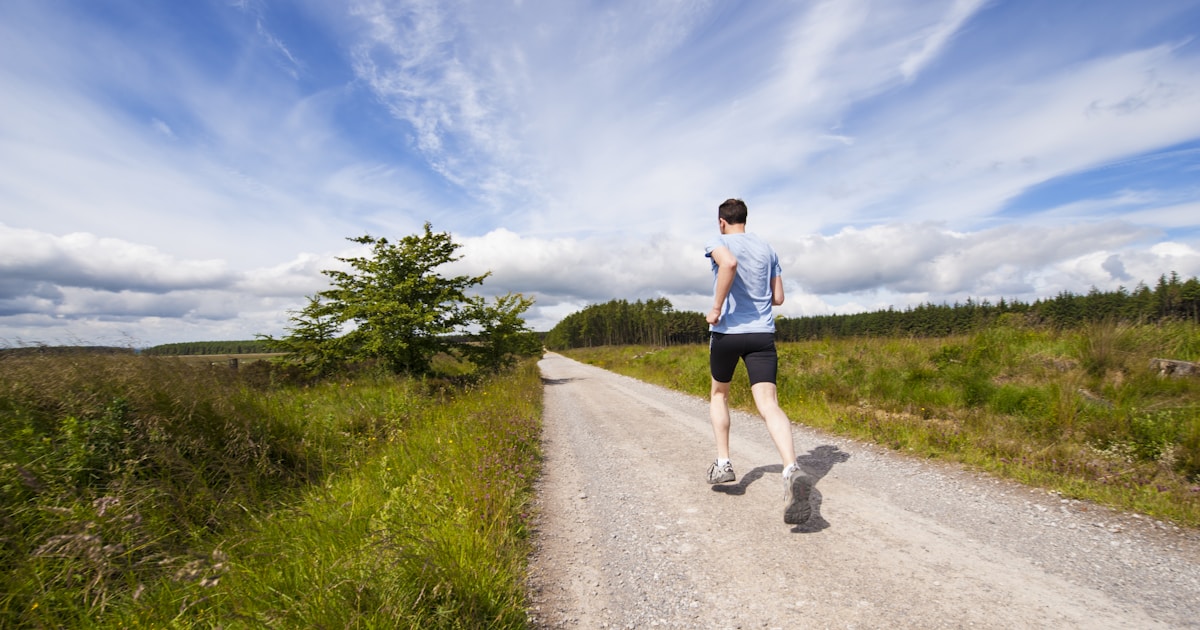
This is a genuinely divisive topic. The barefoot community has passionate advocates. The shoe industry has billions invested. We're going to look at both sides honestly, because the answer is more nuanced than either camp admits.
A brief history
Humans have been running for roughly two million years. Modern cushioned running shoes have existed for about fifty. Nike introduced the first heavily cushioned running shoe in 1972. Before that, runners wore thin-soled shoes or nothing at all.
So the question isn't "can humans run barefoot?", obviously we evolved to. The real question is whether modern humans, who grew up in shoes on paved surfaces, should try to switch back. That's more complicated.
The case for barefoot
The arguments for barefoot running are well-supported by research. Feet get measurably stronger when they have to work without cushioned support, a 2014 study showed 7-12% increases in foot muscle size after just 12 weeks of minimalist shoe running. Form improves because the body naturally adopts a less impactful stride without cushioning to mask the shock. And the sensory reconnection, 200,000+ nerve endings in each foot, finally getting real input, improves balance and proprioception in ways that carry over into daily life.
The injury argument is more nuanced than advocates admit, but the direction is clear: forefoot striking reduces knee loading by up to 12%, and injury rates haven't improved despite decades of shoe technology advancement. Something isn't working.
There's also a simpler point: it's free. No $150+ shoes to replace every few hundred miles.
For a deeper look, our full benefits breakdown goes through the research.
The case for shoes
The pro-shoe arguments are mostly practical, and they're legitimate.
Protection is real. Glass, nails, extreme temperatures, sharp rocks, these are genuine hazards, especially in cities. You can develop awareness and tougher soles over time, but you can't will away a rusty nail.
The transition period is also a real cost. Switching to barefoot running means weeks or months of reduced volume while your feet adapt. If you're training for something. That's a significant trade-off. And if you rush the transition, as many people do. Yu can end up injured, which defeats the entire purpose.
Some people have structural issues where support genuinely helps. Not everyone's feet are the same, and "just take your shoes off" isn't universally good advice. Severe flat feet, ankle instability, neuropathy, these are situations where a more cautious approach is warranted.
Social friction is real too. Running barefoot draws stares, comments, and occasionally hostility. Some races require shoes. Most gyms require shoes. It shouldn't matter, but it does.
What the research says
Lieberman et al. (2010, Nature) was the breakthrough: habitually barefoot runners generate significantly lower impact forces than shod heel-strikers. This gave barefoot running serious scientific credibility.
Ridge et al. (2013) added an important caution: runners who transitioned to minimalist shoes too quickly showed higher rates of bone marrow edema, a precursor to stress fractures. The speed of transition matters enormously.
Miller et al. (2014) demonstrated that feet genuinely adapt: 12 weeks of minimalist shoe use increased foot muscle size by 7-12% and improved arch height. The "use it or lose it" principle works in both directions.
Fuller et al. (2017) published a meta-analysis finding that running shoes don't reduce injury rates compared to barefoot or minimalist running. This is maybe the most damning finding for the shoe industry, fifty years of innovation and no measurable injury prevention benefit.
The honest summary: barefoot running has real biomechanical advantages. It is not universally superior. Transition speed is the strongest predictor of good or bad outcomes.
The middle ground
For most people, minimalist shoes are the pragmatic answer. Zero drop keeps your foot in a natural position. A thin, flexible sole preserves ground feel while stopping sharp objects. A wide toe box lets your toes work. No arch support means your muscles do the job.
You lose some sensory richness compared to true barefoot running, and you lose the skin-toughening adaptation. But you gain protection, social acceptability, and the ability to run on any surface without worrying about debris. For most runners in most situations. That's a reasonable trade.
Another option worth considering: toe shoes with individual toe pockets (like Vibram FiveFingers). They offer even more toe freedom than traditional minimalist shoes while still providing a protective sole. Some runners find them the ideal bridge between barefoot and shod running.
Who should try barefoot?
Runners who keep getting injured despite trying different shoes. People who are curious about natural movement and willing to invest in a gradual transition. Anyone who wants to strengthen their feet for the long term. And people who just want to try it, curiosity is a perfectly valid reason.
The transition guide covers how to do it safely.
Who should keep their shoes?
Runners with acute injuries that need protection while healing. People with neuropathy or significantly reduced foot sensation, barefoot running depends on sensory feedback. Runners in areas with constant debris or extreme temperatures. Anyone who tried a gradual transition and consistently had problems.
And honestly: runners who are healthy, injury-free, and happy with their current setup. "If it ain't broke" is real wisdom. You can still add some foot exercises and occasional barefoot strides without overhauling your entire approach.
Our honest take
We're obviously biased toward barefoot running, it's in the domain name. That said, here's an honest assessment.
Most runners would benefit from some barefoot or minimalist running. Even if it's just strides on grass twice a week. Stronger feet help everyone regardless of what shoes they wear for their main training.
A full transition is worthwhile for many people, but only if done gradually. Months, not days. Follow a structured plan.
The best approach is the one you'll actually do consistently and enjoyably. If barefoot running sounds miserable to you, it probably won't stick. If it sounds intriguing, there's zero risk in trying, walk barefoot more, do some foot exercises, run a few strides on grass. You'll know quickly whether it's for you.